FROM THE SERVANT GENERAL
A PERSPECTIVE ON COVID-19
(Part 23)
THE BIBLE
April 27, 2020
Today’s readings:
Acts 6:8-15
Psalm 119:23-30
John 6:22-29
Still under lockdown due to COVID-19, with most of churches throughout the world still closed, with our MFC community life and mission still being hampered, “What can we do to accomplish the works of God?” (Jn 6:28).
Due to COVID-19, the world lockdown has radically cut down on economic activity, with many losing their livelihoods. Of special concern are the poor, especially those who were on daily wage. Now even the basic necessities, especially food, are out of reach for many. This situation is for governments to resolve, even as the Church and we in MFC try to help out in whatever way.
But for Catholics there is a greater loss, that of spiritual food. We talked about the Eucharist yesterday, how it is crucial to life on earth and especially eternal life. Jesus himself says, “Do not work for food that perishes but for the food that endures for eternal life, which the Son of Man will give you.” (Jn 6:27a). We know we cannot live without food, but do we know we cannot live eternally without the Eucharist? We strive earnestly to work to be able to buy food, but do we long for and strive to receive the spiritual food of Holy Communion? Many Catholics have focused on the former and neglected the latter.
So what can we do to accomplish the works of God? Jesus tells us, “This is the work of God, that you believe in the one he sent.” (Jn 6:29). There are two things that are important. One, to know God and to know the work of God, to know our faith and to grow in it. And two, to share that faith with others, so that they too can believe. The work of God for us is to live Christ and to share Christ.[1]
For this, one most important tool or resource is the Bible, which contains the very laws and instructions of God. St Jerome says that ignorance of scriptures is ignorance of Christ. So we cannot live and share Christ if we do not know the scriptures. Unfortunately, most Catholics do not know the Bible. This is tragic, for their own souls, and for the mission in the world that has been entrusted to them through the Church.[2]
What can the Bible and God’s words in it do for us?[3]
First, in a world that is more and more antagonistic and oppressive to practicing Christians, God’s word gives us wisdom on how to respond and how to proceed. “Though princes meet and talk against me, your servant meditates on your statutes.” (Ps 119:23). We do not face the world with worldly and human wisdom. We can only refute the so-called wisdom of the world, which is foolishness to God, with God’s own wisdom.
Second, God’s word guides us in the way we are to go. “Your testimonies are my delight; they are my counselors.” (Ps 119:24). There are many voices in the world, most of them leading us astray. And many Christians have indeed been led astray. We ourselves need to know God’s word by reading and learning from the Bible. Then it would be God Himself, and not anyone else, who would counsel us.[4]
Third, especially for those in desperate situations, God’s word gives life. “My soul clings to the dust; give me life in accord with your word.” (Ps 119:25). Many times circumstances cut us down to the ground, even grind our faces in the dust. It is only God who can help us understand what is happening, and even let us appreciate suffering if that is His intent. God gives us hope in life.
Fourth, God’s word shows us what we are doing right or not right in our life in the world. “I disclosed my ways and you answered me; teach me your statutes.” (Ps 119:26). We gauge our thoughts and deeds on the standard of God’s word. We bring ourselves before the scrutiny of God, and look to His guidance.
Fifth, God’s word inspires us and can teach us about the inscrutable wisdom of God.[5]“Make me understand the way of your precepts; I will ponder your wondrous deeds.” (Ps 119:27). God’s wisdom is not the wisdom of the world, and vice versa. In fact, the wisdom of the world is foolishness to God. But we keep being bombarded by the so-called wisdom of the world. We are in desperate need of God’s perspective.
Sixth, in today’s depressing situation with COVID-19, God’s word encourages us and gives us hope. “My soul is depressed; lift me up according to your word.” (Ps 119:28). Only God can truly give us hope, as He assures His people of a future full of hope.[6] Even for those who die of COVID-19, if they die in the grace of God, they and their relatives should be consoled by the reality that death is just a gateway to eternal life. Then mourning can turn to joy.
Seventh, in a world that has greatly influenced our minds and hearts as to what it says is good and true,[7] God’s word will give us the truth and show us the way to go. “Lead me from the way of deceit; favor me with your law.” (Ps 119:29). Satan is the father of lies. Unfortunately, many Christians, including Catholics who serve in the Church, tell lies and half-truths for their own agenda. We must avoid deceit, and we must help ourselves to not be victims of deceit, by knowing God’s truth.
Eighth, God’s words will bring us to our true allegiance, which is to God and not to the gods of this world. “The way of loyalty I have chosen; I have kept your judgments.” (Ps 119:30). We are called to fidelity to God and our covenant. Many Christians try to serve both God and mammon, to worship God while looking to many idols in life, to try to mesh the secular and mundane with the sacred. But we must make our choice. It is God first and foremost. Then everything else we do needs to be in line with this basic choice.
So we need to know God and grow in our faith. We meet Christ and we live Christ. The second thing in accomplishing the works of God is to share Christ with others so that they too put their faith in him.[8] In this, we also look to the testimony of the Bible as to the lives of the saints that went before us.[9] One such saint was Stephen, who was the first martyr.
We are called to be witnesses of and to Jesus. The word “martyr” comes from the Greek “martys” or “martus,” which means witness. The ultimate witness is martyrdom. As the world is increasingly antagonistic to authentic Christians, intensifying oppression and persecution,[10]seeking to suppress the faith by any means, this darkened world is moving more in this direction.
What can we learn from Stephen?
One, he of course was an ordinary man like all of us, but he was able to do extraordinary works as he accepted God’s call. The work we do is God’s work. Our abilities and strength come from God. God provides as He sees fit, in order to accomplish His works through us. Thus “Stephen, filled with grace and power, was working great wonders and signs among the people.” (Acts 6:8).
Two, he like most of us probably was not formally educated in theology or the scriptures, but then the learned from all over “came forward and debated with Stephen, but they could not withstand the wisdom and the spirit with which he spoke.” (Acts 6:9-10). If we become God’s instruments, tasked with His divine work, then God will provide the wisdom and power that we need, through the Holy Spirit.
Three, as the world is increasingly antagonistic to Christians and would like to suppress if not eradicate the Christian faith, just like with Stephen, we can expect opposition and persecution. This would include lies, stirring up others against us, arrest, false witness (Acts 6:11-14). Unfortunately, at times these will come from those within the Church, as with the elders, scribes and Sanhedrin in the case of Stephen (Acts 6:12). All the more we need to know our faith, to be able to refute anyone in the world or in our Church who would preach false doctrine.
Fourth, as the world is antagonistic to us and seething with fury, all the more we are to behave as true disciples of Jesus, living God’s words that include love for enemies. In the midst of demons all around us, we are to be like angels. “All those who sat in the Sanhedrin looked intently at him and saw that his face was like the face of an angel.” (Acts 6:15). Only the Holy Spirit through the words of God in the Bible can accomplish this for us.
COVID-19 has locked us down in our homes. It has given us a lot of time. Use it to read, study, search, learn, and meditate on the word of God in the Bible. Do not allow God’s word to remain locked up. Otherwise we will be locked out of the fullness of God’s grace. So lock in to God’s word. This time is God’s gift to us. Use it to grow deeper in your faith, to understand what God is about in the world, and to become more equipped to do the fullness of our mission when the time comes.
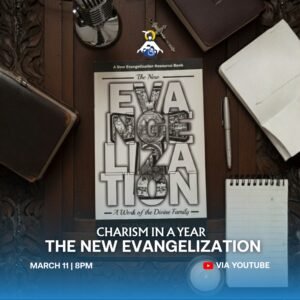
[1] If you have not yet read my book “The Live Christ, Share Christ Movement (2nd Edition), now is the time to do so. While you are at it, to understand God’s call to our Church to New Evangelization, you must also read “The New EvangelizationA Work of the Divine Family” and “What is New About the New Evangelization?” Do so and be better equipped.
[2] Even our pastors in our Church need to get back to basics, as many are neglecting the missionary dimension of the body of Christ. Our Church, first and foremost, is a missionary Church.
[3] There of course is so much more, but I have limited this to the Bible verses for today. But do read the rest of Psalm 119, the longest psalm in the Psalter, and see all the wonderful ways the Bible is of help to us.
[4] If we are to listen and learn from others, it should be because they themselves know the word of God. But how can we know if they know, unless we ourselves know what God says?
[5] Do read my book “The Inscrutable Wisdom of God.”
[6] See Jeremiah 29:11.
[7] The world is today characterized by lies and deceit, exemplified by the proliferation of fake news, both from social media as well as mainstream media. It is easy to be led astray, especially from the ways of God.
[8] Our particular emphasis and call in MFC is to reach lapsed Catholics, who are in effect baptized pagans.
[9] Aside from the saints in the New Testament, there are also the patriarchs of Israel, the leaders, the judges, the psalmists andthe prophets in the Old Testament.
[10] This is true not just in non-Christian nations, but increasingly in Christian ones, such as the USA, and Catholic ones, such as those in Europe, Latin America and the Philippines.